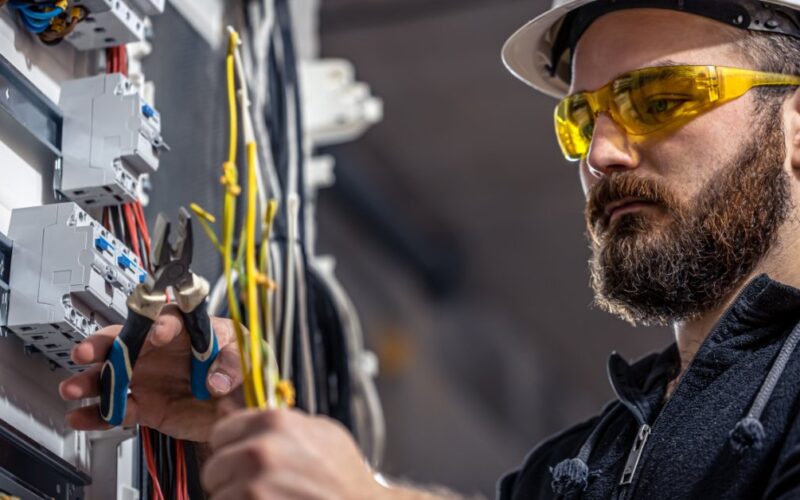
Whether they install new wiring, troubleshoot equipment, upgrade electrical panels, or maintain industrial systems, they regularly work around live circuits, heavy equipment, elevated surfaces, and unpredictable jobsite conditions.
Strong safety habits help electricians manage risks without slowing work. Experience helps, but even seasoned professionals must stay alert because conditions can change quickly. Understanding common hazards gives electricians a better chance to recognize problems on the jobsite and make smarter choices throughout the day.
Electrical Shock
Electrical shock ranks among the most obvious dangers electricians face, but familiarity can make the risk easy to underestimate. Contact with energized wiring, damaged equipment, exposed conductors, or improperly grounded systems can send electrical current through the body.
Electricians can reduce risk by identifying energy sources before work begins and by following established lockout procedures when necessary. They should also test circuits with properly rated equipment rather than assuming someone disconnected the power.
Wet environments increase the risk because water conducts electricity. Electricians working outdoors, in basements, near plumbing systems, or around industrial equipment should pay close attention to moisture before handling electrical components.
Arc Flash
An arc flash can release an enormous amount of energy in a fraction of a second. When electrical current travels through the air between conductors or from a conductor to ground, the resulting event can create intense heat, light, pressure, and flying debris.
Electricians often face this hazard when they work around switchgear, electrical panels, transformers, and other high-energy equipment. Loose connections, damaged insulation, accidental contact between conductive tools and energized components, or equipment failure can trigger an arc.
Proper planning plays a key role in reducing exposure. Electricians should understand equipment ratings, follow safe approach distances, and wear protective gear appropriate for the level of electrical energy present. Using essential worksite safety equipment also provides workers with another layer of protection when job conditions create additional risks.
Burns
Electrical work can cause several types of burns. Direct contact with energized components can cause electrical burns, while an arc flash can cause severe thermal burns. Hot equipment, sparks, and overheated wiring can also injure exposed skin.
Electricians need to recognize warning signs before equipment reaches a dangerous condition. Discoloration, unusual odors, excessive heat, buzzing, and damaged insulation can indicate electrical problems that require attention.
Protective clothing, gloves, face protection, and careful work practices can help prevent burn injuries. Electricians should also avoid wearing materials that can melt onto the skin when exposed to intense heat.
Falls From Height
Many electricians work above ground while installing lighting, running conduit, inspecting electrical systems, or accessing equipment near ceilings. Ladders, scaffolding, lifts, rooftops, and unfinished structures pose fall hazards.
Electricians should inspect ladders and access equipment before use. They also need stable footing and sufficient space to work without overreaching. Reaching too far from a ladder can quickly shift a worker’s center of gravity and cause a fall.
Electrical hazards can also complicate ladder selection. Metal ladders conduct electricity, so electricians should choose appropriate alternatives when working near energized equipment. A few extra minutes of preparation can prevent a serious fall.
Trips and Slips
Jobsites rarely stay neat for long. Extension cords, tools, conduit, packaging, scraps, construction debris, and temporary lighting can create obstacles throughout the work area. Water, oil, mud, and dust can make floors even more dangerous.
Electricians can reduce these risks by keeping walkways clear and organizing equipment while working. Good housekeeping also helps workers move quickly during an emergency without tripping over materials.
Lighting deserves attention, too. Electricians sometimes work in unfinished buildings, utility rooms, attics, crawl spaces, or mechanical areas where visibility remains limited. Portable lighting can make hazards easier to spot before someone steps into trouble.
Cuts and Punctures
Electrical work involves more than wires and panels. Electricians frequently handle sharp metal conduit, cable trays, hand tools, sheet metal, junction boxes, fasteners, and construction materials that can cut or puncture skin.
Even a small cut can reduce grip strength and make detailed electrical work more difficult. Gloves that match the task can protect the hands without creating unnecessary difficulty when electricians need precise control.
Electricians should also store sharp tools properly rather than leaving them on ladders, platforms, or floors. A tool that falls from an elevated work area can injure someone below, and a poorly placed blade can cut the next worker who reaches into a tool bag.
Confined Spaces
Some electrical systems sit in tight locations that create unique hazards. Electricians may need to enter crawl spaces, utility vaults, tunnels, tanks, or other restricted areas to install or service equipment.
Limited movement can make electrical work more difficult because workers may struggle to reposition themselves safely. Confined areas can also have poor ventilation, excessive heat, harmful gases, or limited access to exits.
Electricians should understand the conditions before entering these areas. They may need ventilation equipment, atmospheric testing, communication systems, or a nearby worker, depending on the location and the type of work.
Heavy Lifting
Electricians often handle heavier materials than people outside the trade might expect. Large cable reels, transformers, conduit bundles, generators, panels, batteries, and toolboxes can strain the back, shoulders, and knees.
Trying to lift heavy equipment alone can lead to muscle injuries that affect a worker for weeks or longer. Electricians should use carts, dollies, lifting devices, or help from coworkers when equipment exceeds a comfortable weight.
Body position also affects lifting safety. Keeping a load close to the body and avoiding sudden twisting can reduce strain. Planning where an object needs to go before lifting it can prevent awkward movements midway through the task.
Noise Exposure
Construction sites and industrial facilities can generate high noise levels throughout the workday. Electricians may work near drills, saws, generators, machinery, demolition equipment, compressors, and other loud equipment.
Repeated exposure to excessive noise can gradually affect hearing. Hearing protection can help electricians work around loud equipment without sacrificing communication or awareness.
Workers still need to hear alarms, instructions, and approaching equipment, so they should choose protection that suits the environment. Communication becomes even more important when multiple trades work close together.
Moving Equipment
Electricians often share work sites with forklifts, lifts, cranes, trucks, excavators, and other moving equipment. Drivers may have limited visibility, especially in crowded work zones or areas with stacked materials.
Electricians should stay aware of traffic patterns and avoid walking through operating equipment areas whenever possible. High-visibility clothing can help drivers spot workers, but visibility alone doesn’t replace careful positioning.
Workers should also avoid standing beneath suspended loads or near equipment that could shift unexpectedly. Paying attention to the surrounding activity prevents many injuries that have little to do with electricity.
Fatigue and Distraction
Long shifts, repetitive work, tight deadlines, and physically demanding conditions can impair concentration. Electrical work requires close attention, so fatigue can increase the risk of touching the wrong conductor, skipping a safety step, or misreading equipment.
Electricians should take appropriate breaks and avoid rushing through complex tasks just to finish faster. A brief pause to review the next step can prevent a much longer interruption caused by an injury or damaged equipment.
Phones, conversations, and nearby construction activity can also divide attention. Workers should minimize distractions during tasks involving energized systems or other serious hazards.
Safer Habits Build Better Jobsites
Electricians can’t remove every common hazard from the places where they work. Construction sites change, equipment fails, and unexpected conditions appear. Strong safety habits give electricians a reliable way to respond when those challenges arise.
Awareness begins with understanding the risks associated with each task. Electricians who inspect their work areas, use appropriate protective equipment, communicate with coworkers, and avoid shortcuts can reduce injuries while maintaining productive jobsite routines. Safety doesn’t compete with good electrical work. It supports the skill, precision, and professionalism the trade demands.
Image Credentials: puhimec, # 464916429
end of post … please share it!
-------------------------------------------------------------------------------------------------------------
-------------------------------------------------------------------------------------------------------------
home remodeling reference (links to internal page)
 |
 |
 |
 |
| directory | photos | forms | guide |
Helpful article? Leave us a quick comment below.
And please share this article within your social networks.