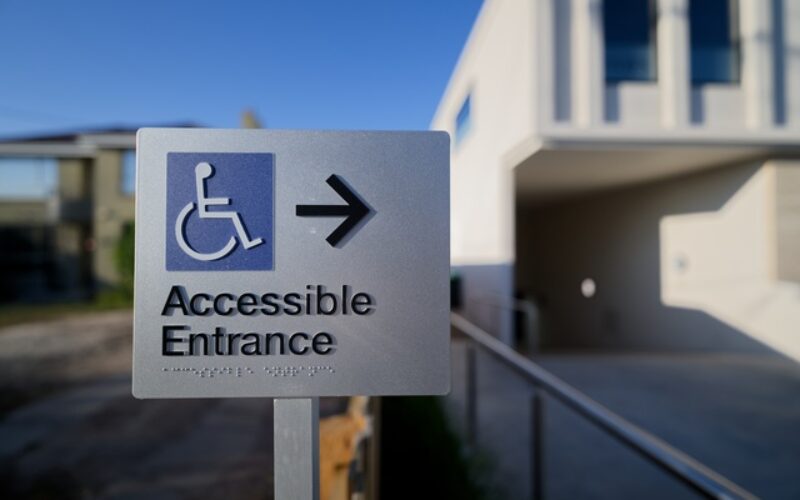

Running a business comes with a long to-do list, and keeping up with compliance is right at the top. It’s important to understand exactly what accessibility laws businesses have to follow so you can welcome every customer and avoid legal trouble. While it might seem complicated at first, most of these regulations just boil down to fairness and equal access. Let’s break down the big ones you need to keep on your radar.
The Americans with Disabilities Act (ADA)
The ADA requires businesses to provide equal access and accommodations for people with disabilities. This applies to both physical locations and e-commerce websites.
For example, physical locations need to be accessible to people with disabilities. Many businesses choose to install automatic doors because they enhance business accessibility and thereby satisfy the demands of the ADA by removing physical barriers for customers with mobility aids. Ramps, elevators, and accessible restrooms are other examples of modifications that make a physical space compliant with the ADA.
For e-commerce websites, accessibility means designing platforms that all users can navigate, including those using screen readers or other assistive technologies.
The Rehabilitation Act of 1973
If your business receives federal funding, this one applies directly to you. Section 504 of this act was actually the first civil rights law in the U.S. protecting people with disabilities. It strictly forbids organizations that get federal financial assistance from excluding people based on disability. So, if you accept government grants or contracts, you have to verify that your programs and activities remain accessible to everyone.
The Web Content Accessibility Guidelines (WCAG)
While WCAG isn’t a law itself, courts use it as the standard for web accessibility under the ADA. It outlines how to make web content more accessible to people with disabilities. This includes things like adding alt text to images, using proper color contrast, and making sure your site works with screen readers. Ignoring this opens you up to lawsuits.
State-Specific Accessibility Laws
Depending on where you operate, your state might have stricter rules than the feds. California, for instance, has the Unruh Civil Rights Act, which provides even more protection than the ADA and allows for monetary damages in lawsuits. It’s always smart to check your local statutes because federal compliance might not be enough. You don’t want to fix everything for the ADA only to get dinged by a local regulation.
The Fair Housing Act (FHA)
If your business involves housing, like running an apartment complex or managing rentals, the FHA applies to you. It prohibits discrimination in the sale, rental, and financing of housing. Under this law, landlords must allow reasonable modifications for tenants with disabilities, like installing grab bars. You also can’t refuse to rent to someone because they use a service animal. It’s all about giving everyone an equal shot at housing.
A Smart Move for Your Business
Getting familiar with the accessibility laws your business has to follow sets you up for fewer problems and better connections with your community. Go through your place, and check your site—see where tweaks will help. You’ll help your team, help your customers, and stay out of legal messes. That’s really what you want as a business owner, right?
Image Credentials: Benjamin Crone, 1624570257
-------------------------------------------------------------------------------------------------------------
-------------------------------------------------------------------------------------------------------------
home remodeling reference (links to internal page)
 |
 |
 |
 |
| directory | photos | forms | guide |
Helpful article? Leave us a quick comment below.
And please share this article within your social networks.