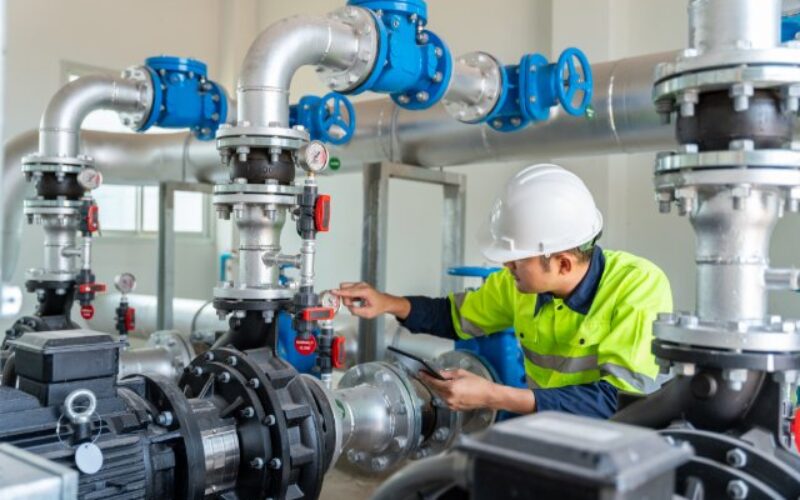

Industrial pipelines often operate under intense pressure and aggressive chemical exposure, leaving little room for unnoticed defects. A small weakness can eventually cause leaks or an expensive shutdown across an entire facility. Prevention starts with a clear understanding of each pipeline and the conditions it faces throughout its service life.
Learning how to prevent costly industrial pipeline failures depends on close cooperation across operations, maintenance, and engineering teams. Employees who understand system behavior can identify subtle changes before those changes develop into serious threats. When facilities treat pipe integrity as an operational priority, they gain greater control over risks that could otherwise create expensive emergencies.
Make Inspections Part of Normal Operations
Pipeline problems rarely announce themselves with an immediate rupture. Corrosion, cracks, wall loss, and joint defects often develop gradually beneath insulation or inside sections that appear normal from outside. Regular inspections give maintenance teams opportunities to detect these threats before damage reaches an advanced stage.
Inspection frequency should reflect actual risk instead of an identical schedule across every pipe system. Older lines or systems with harsh chemical exposure often deserve closer attention than newer pipes under mild conditions. Past inspection results can also reveal where deterioration tends to return and where additional attention makes sense.
Address Corrosion Before It Spreads
Corrosion can quietly remove enough material from a pipe wall to transform a dependable line into a serious operational hazard. Internal chemical attack may remain invisible until an inspection reveals significant wall loss. External exposure can create similar damage beneath insulation or wherever moisture reaches an unprotected metal surface.
Effective corrosion control must reflect the environment around each pipeline. Protective systems require routine evaluation because coatings can crack, insulation can trap moisture, and other safeguards can lose effectiveness over time. Early correction costs far less than emergency repairs after corrosion causes a leak or forces an unplanned shutdown.
Match Pipe Materials to Process Demands
Every industrial fluid creates different demands for the pipe that carries it. Chemicals that appear harmless under one set of conditions can become aggressive after pressure or temperature changes. Engineers must evaluate actual service conditions before they approve materials for new pipe sections or major repairs.
Learning the right industrial piping material selection for corrosive media will help a facility create systems that resist premature deterioration. The correct alloy can tolerate chemical exposure without rapid wall loss that forces repeated repairs. Material compatibility deserves another review whenever a facility changes its process chemistry or introduces different operating conditions.
Keep Pressure Under Control
Industrial pipelines rely on predictable pressure to maintain safe operation. Unexpected surges place additional force on pipe walls and can expose weaknesses around welds or valves. Even a brief pressure event may create damage that remains hidden until another stress event occurs.
Operators should treat repeated pressure changes as evidence of a problem rather than a routine inconvenience. A faulty pump or unstable flow can place excessive stress across the system. Accurate instruments help teams recognize these changes early enough to investigate the cause before equipment suffers serious damage.
Account for Temperature Changes
Temperature has a direct effect on the physical behavior of industrial pipe. Heat can expand materials across substantial distances, and lower temperatures can cause contraction that places stress around fixed points. Without enough flexibility, those forces can affect joints, supports, welds, and connected equipment.
Insulation provides valuable temperature control when it remains intact and suitable for the application. Damage can expose pipe surfaces to unwanted thermal changes or allow moisture to reach areas hidden from routine visual checks. Maintenance teams should treat insulation condition as part of pipeline integrity rather than regard it as a separate facility concern.
Give Welds and Connections Close Attention
A pipeline can only remain as dependable as the joints that connect its sections. Weld defects may remain unnoticed until corrosion or pressure exposes the weakness under actual service conditions. Proper procedures and qualified personnel reduce the chance that a vulnerable connection enters active operation.
Mechanical connections also deserve careful attention throughout the life of a pipeline. Flanges can loosen, gaskets can deteriorate, and repeated stress can affect connections that once performed without problems. Inspections after repairs or major process changes help confirm that these areas still support reliable operation.
Control Unwanted Pipe Movement
A pipeline that moves more than expected often provides an early warning of another problem. Vibration near pumps or other equipment can create repeated stress that eventually produces fatigue around joints and vulnerable pipe sections. Ignoring that movement allows minor mechanical issues to become expensive structural damage.
Supports control pipe position without preventing necessary thermal movement. Corrosion or physical damage can weaken a support until loads shift into areas never meant to carry them. Repair crews should address those defects before added stress begins to affect nearby components.
Respond to Changes in Process Conditions
Industrial processes rarely remain identical throughout the entire life of a facility. Production demands can change or equipment modifications can alter pressure and temperature conditions. Existing pipelines may no longer suit the application once those changes exceed the original design assumptions.
Operators often notice unusual system behavior before a formal inspection reveals a problem. Changes in noise, flow, pressure, or temperature can signal conditions that deserve technical review. Clear communication allows maintenance personnel to investigate those observations before the system reaches a point where failure becomes more likely.
Use Maintenance History To Spot Patterns
A pipeline’s history can reveal risks that one inspection alone cannot expose. Records from previous repairs and condition assessments show how defects develop across time and whether the same trouble areas continue to return. That information gives engineers stronger context when they decide how to address a new concern.
Complete documentation also reduces dependence on employee memory when experienced personnel leave, or responsibilities change. Future teams can see what happened and how a pipeline responded after corrective work. Those details can prevent repeated mistakes and support more informed decisions during later maintenance activity.
Make Prevention Part of Facility Culture
Effective pipeline protection to prevent costly failures depends on more than procedures stored in a maintenance office. Employees across a facility need to recognize that unusual conditions deserve attention before they interfere with production. Management support helps create an environment where personnel report concerns early rather than wait for unmistakable evidence of failure.
Strong communication keeps operations and maintenance personnel focused on the same system risks. Engineers can provide technical context and repair teams can share information from recent work. That cooperation creates a more complete picture of pipeline condition than any department could develop alone.
Reliable pipeline protection starts with decisions that reflect real operating conditions rather than assumptions about how a system should perform. Material compatibility deserves careful thought, and regular attention must continue throughout the pipeline’s service life. Inspections, maintenance history, and technical expertise can reveal problems that might otherwise remain hidden.
A proactive facility does not wait for a rupture to prove that a pipeline needs attention. It treats small changes as valuable information and responds before those changes become expensive emergencies. That approach protects industrial infrastructure and helps keep essential process systems dependable across demanding operations.
Image credentials: Tong2530, 589975399
-------------------------------------------------------------------------------------------------------------
-------------------------------------------------------------------------------------------------------------
home remodeling reference (links to internal page)
 |
 |
 |
 |
| directory | photos | forms | guide |
Helpful article? Leave us a quick comment below.
And please share this article within your social networks.