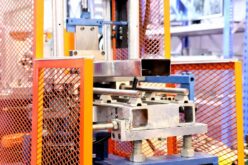

Every purchasing decision carries consequences beyond the amount printed on an invoice. For manufacturers, contractors, and product developers, a lower material price can seem like an easy way to protect margins. Yet the savings may disappear when those materials wear out, interrupt production, or fail to meet performance expectations. Understanding the hidden costs of choosing cheaper materials helps businesses evaluate purchases according to their actual value rather than their immediate affordability.
A competitive price is not automatically a warning sign. Some affordable materials perform exceptionally well in suitable applications. Problems arise when procurement teams focus on unit cost without examining how a material will behave throughout its service life. The better question is not simply what a component costs today, but what it will cost to use, maintain, and eventually replace.
Higher Replacement and Maintenance Expenses
Materials that deteriorate quickly can turn an inexpensive purchase into a recurring expense. A low-priced component may need frequent replacement because it cannot tolerate friction, moisture, vibration, or temperature changes in its operating environment. Each replacement creates additional spending on parts, labor, inspection, and disposal.
Maintenance teams also spend time diagnosing problems caused by unsuitable materials. Technicians may need to adjust equipment more often, reinforce weakened assemblies, or repair damage to neighboring components. These expenses are rarely included in the original purchasing comparison, even though they can exceed the initial savings over time.
Production Downtime and Missed Deadlines
When a material fails during operation, the cost extends beyond the damaged part. A production line may stop while workers identify the issue, locate a replacement, and restore equipment. Even a short interruption can disrupt schedules when several manufacturing stages depend on one another.
Delayed production can lead to overtime, expedited shipping, missed delivery windows, and strained customer relationships. Businesses operating with tight schedules may have little flexibility to absorb these disruptions. Choosing materials that meet realistic performance requirements can reduce avoidable interruptions, although no material can eliminate every operational risk.
Quality Problems That Reach the Customer
A material does not have to break completely to create a costly problem. It may warp, discolor, lose dimensional stability, or behave inconsistently during processing. Those changes can affect product appearance, fit, functionality, and customer satisfaction. In industries with strict specifications, even minor variations can make finished goods unusable.
Quality issues generate scrap, rework, additional inspections, and potential returns. If defective products reach customers, the company may also face warranty claims or reputational damage. The cost of correcting a problem after distribution is often greater than catching it during production, making dependable inputs important to consistent quality control.
Material Performance Depends on the Application
The most expensive option is not necessarily the best option either. Effective selection begins with understanding the demands of a specific application. Engineers and purchasing teams should consider operating temperatures, exposure to chemicals, electrical requirements, mechanical loads, and expected service life before comparing prices.
For example, certain electrical and industrial components require materials with suitable insulating and structural characteristics. An overview of the benefits of phenolic paper laminated sheets can provide context for evaluating one material category in appropriate applications. Such information is most useful when paired with verified specifications, testing requirements, and the conditions in which the finished product will operate.
A material that performs well in one environment may be unsuitable in another. Comparing technical data and confirming compatibility helps businesses avoid paying for unnecessary features while also preventing underperformance caused by choosing solely on price.
The Labor Costs Behind Inexpensive Inputs
Lower-quality inputs can increase the amount of work needed to produce an acceptable result. Employees may spend extra time sorting inconsistent stock, adjusting machinery, correcting defects, or repeating assembly steps. These small inefficiencies accumulate across shifts and become especially expensive in high-volume operations.
Material inconsistency can also complicate training and standard operating procedures. Workers who cannot predict how an input will behave must make more adjustments, increasing process variability. Reliable materials support repeatable workflows and allow employees to focus on productive work instead of preventable corrections.
Supply Chain Uncertainty and Inventory Pressure
An attractive quote means little if a supplier cannot provide consistent quality or dependable delivery. Unexpected substitutions, variable batches, and incomplete documentation can force businesses to inspect incoming materials more closely or hold extra inventory as protection against shortages.
Carrying additional stock ties up working capital and warehouse space. Emergency orders may involve premium freight charges, while sourcing replacements from unfamiliar vendors can require new qualification work. Evaluating suppliers for traceability, responsiveness, and consistency is therefore as important as negotiating a favorable unit price.
Safety, Compliance, and Liability Exposure
Materials used in equipment, buildings, and industrial products may be subject to safety standards or customer specifications. Choosing an option that lacks required properties or documentation can create hazards and compliance problems. Depending on the application, failures may expose employees or end users to avoidable risks.
Businesses should verify relevant certifications, test results, and regulatory requirements before approval. A cheaper substitute should never be assumed equivalent simply because it looks similar or fits the same dimensions. Careful qualification helps protect people while reducing the likelihood of recalls, rejected orders, and costly corrective action.
For purchasing teams, documentation also matters after an order is placed. Clear records of approved grades, acceptable tolerances, and supplier changes make it easier to investigate problems and avoid repeating them. Without that information, a seemingly minor substitution can create confusion across multiple departments.
Evaluating Total Cost Instead of Purchase Price
A practical purchasing comparison accounts for the full period a material is expected to remain in service. Alongside unit price, teams can estimate installation time, expected replacement frequency, maintenance needs, downtime exposure, scrap rates, and disposal costs. These estimates do not need to be perfect to reveal meaningful differences between alternatives.
Cross-functional input improves the analysis. Procurement understands pricing and supplier terms, engineers understand performance requirements, production teams see process challenges, and maintenance staff know common failure patterns. Testing a small batch before a larger commitment can also uncover issues that are difficult to predict from a product description.
In practice, the hidden costs of choosing cheaper materials become easier to manage when decisions reflect evidence rather than assumptions. Businesses that balance affordability with durability, consistency, safety, and supplier reliability are better positioned to protect both operating budgets and customer trust. The goal is not to buy the most expensive material, but to choose the option that delivers dependable performance at a sustainable total cost.
Image Credentials: Deemerwha studio, 480329143
-------------------------------------------------------------------------------------------------------------
-------------------------------------------------------------------------------------------------------------
home remodeling reference (links to internal page)
 |
 |
 |
 |
| directory | photos | forms | guide |
Helpful article? Leave us a quick comment below.
And please share this article within your social networks.