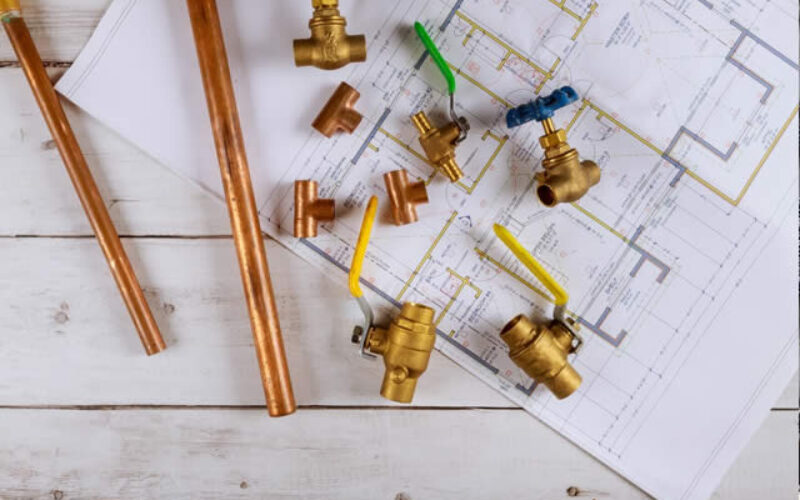
Whether you’re building a new facility or improving your office, you want to get it right the first time. You can start with these tips on how to choose the right pipe material.
Your choice will depend on how efficient it is to install the pipes. Other factors include ease of maintenance, optimal safety, and, of course, your budget. You can narrow down your options based on which system the pipes use. Certain materials are popular because of their unique characteristics.

The Water Distribution System
This system delivers water throughout your building, both heated and unheated. The most popular kinds of pipes for this include:
-
Pex
This flexible plastic has a slightly higher upfront cost, but you can install it quickly and it requires minimal maintenance. It’s not a good pick for outdoor applications, though; UV rays can corrode the pipes’ outer layer.
-
Copper
This is a classic choice because copper is so durable and reliable. It can transport both hot and cold water. However, installation and maintenance involve soldering, which might require a specialist.
-
PVC
PVC (polyvinyl chloride) is popular for many reasons. It doesn’t leak, can move liquids more quickly than other choices, and has a life expectancy of 100 years. Its thickness can vary to accommodate different uses.
The Drain, Waste, and Vent System
The DWV system removes water, waste, and gas from the building. One tip on how to choose the right pipe material is to use plastic for this application. It’s easier to work with than cast iron and can last even longer.
The choice usually comes down to PVC vs. ABS. Sometimes, your local government will dictate your choice for you. If not, this information can help you decide:
-
PVC
It’s inexpensive, lightweight, and resistant to corrosion. You can distinguish it because PVC pipes are white, while ABS pipes are black. PVC is less expensive than ABS, but installation is less efficient.
PVC requires a two-step process that includes a primer that must dry in between steps, which can add extra labor costs.
other related articles of interest:
-
ABS
Acrylonitrile Butadiene Styrene is a breeze to install, but offers one main drawback: it’s made with BPA. Bisphenol A is common in all kinds of plastics—even food and water containers.
But based on animal studies, many people are now concerned that BPA could have hormonal, neurological, and cardiological effects. The FDA has ruled that it’s safe in pipes, but ultimately, it’s a judgment call.
If you own your own company, you already know that you should delegate tasks to the most qualified specialist—like a plumber. But you should also know your business from the inside out.
You don’t have to be an expert on your office building, but learning the basics will help you find the best people to take care of it.
Image Credit: how to choose the right pipe materials by twenty20.com
end of post … please share it!
GUIDE: achieving success
-------------------------------------------------------------------------------------------------------------
-------------------------------------------------------------------------------------------------------------
home remodeling reference (links to internal page)
 |
 |
 |
 |
| directory | photos | forms | guide |
Helpful article? Leave us a quick comment below.
And please share this article within your social networks.