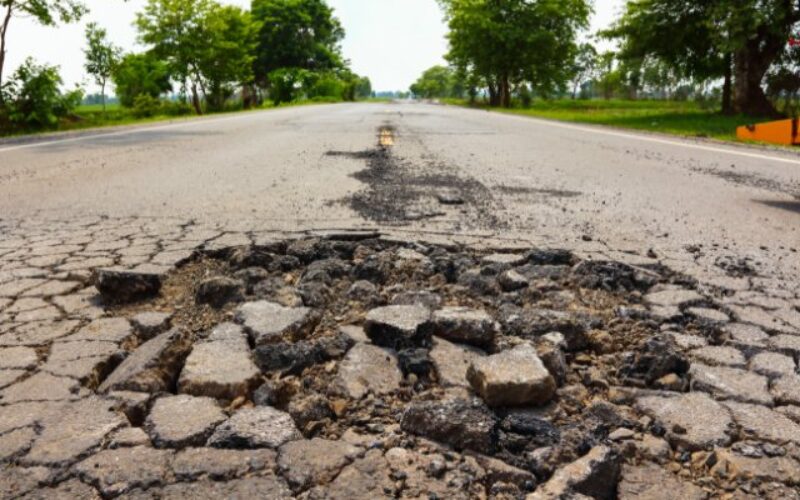
Pavement problems that cost drivers later usually begin with damage that seems minor at first but changes how the vehicle handles.
Potholes Put Tires Under Sudden Stress
A pothole impact forces the tire and wheel to absorb a sharp hit before the suspension has time to react. That sudden pressure can pinch the sidewall or bend a rim, even when the car keeps rolling normally. If you want to protect your tires from costly pothole damage, slow down when you see rough pavement and inspect the tire afterward for bulges or air loss. Ignoring that inspection gives hidden damage time to worsen under daily driving pressure.
Cracked Pavement Wears Tires Unevenly
Cracked pavement creates repeated vibrations that are transmitted through the tire tread with every pass over the road. Over time, that vibration contributes to uneven wear because the tire does not meet the surface as smoothly as it should. A tire with irregular wear loses reliable contact with the road, which affects braking and steering control. Checking tread depth and wear patterns after frequent driving on cracked streets prevents small problems from leading to early replacement.
Raised Edges Can Knock Alignment Off Track
Uneven pavement edges are easy to underestimate because the impact rarely sounds severe. However, a hard strike against a raised seam or rough patch can push alignment out of specification. Once alignment changes, the tires begin scrubbing against the pavement instead of rolling cleanly forward. A vehicle that pulls to one side or has a crooked steering wheel needs attention before the tread wears away on one edge.
Loose Gravel Reduces Control
Loose gravel on damaged pavement changes how the tire grips the road. Instead of pressing into a stable surface, the tread moves across small loose pieces that reduce traction during turns or sudden stops. That loss of grip puts extra strain on the driver’s ability to maintain control. Slower speeds and smoother steering inputs reduce the chance of sliding across unstable pavement.
Standing Water Hides Road Damage
Standing water makes pavement damage harder to judge because it covers holes and broken edges. A shallow-looking puddle might hide a deep pothole that strikes the tire without warning. Water also reduces road contact, so the tire has less grip right when the driver needs more control. Avoiding pooled water when possible protects the tire from hidden impact and lowers the risk of losing traction.
Every rough patch in the road gives the vehicle a choice: absorb the hit cleanly or carry the damage forward. Pavement problems that cost drivers later are easier to control when drivers treat strange noises, pulling, vibration, or pressure loss as warning signs instead of annoyances. The safest response is not panic, but prompt attention before a small road impact turns into a larger repair.
Image Credentials: by tcareob72, File #165345230
end of post … please share it!
-------------------------------------------------------------------------------------------------------------
-------------------------------------------------------------------------------------------------------------
home remodeling reference (links to internal page)
 |
 |
 |
 |
| directory | photos | forms | guide |
Helpful article? Leave us a quick comment below.
And please share this article within your social networks.