Marketing? That often gets handed off to someone else or pushed to the bottom of the list. But here’s the truth: sustainable business growth starts with understanding how marketing actually works.
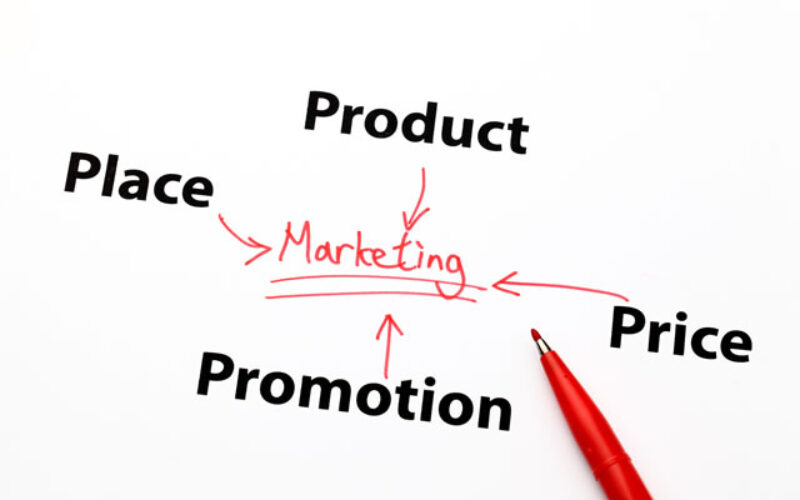
The four P’s of marketing—Product, Placement, Promotion, and Price—form the strategic backbone of every successful business, regardless of size. Mastering them doesn’t require a marketing degree. It requires intention.
According to a 2026 report by The Trust Agency, 50% of small businesses do not have a documented marketing plan, and 44% operate without a clear unique selling proposition.
Those aren’t just troubling statistics—they’re a direct explanation of why so many small businesses struggle to grow beyond a certain point. The four P’s framework gives business owners a structured way to think about every marketing decision they make, turning reactive guesswork into deliberate strategy.
The Framework That Changes Everything
The four P’s of marketing—often called the marketing mix—is a strategic framework first introduced by marketing professor E. Jerome McCarthy in the 1960s and still considered foundational today.
According to Salesforce, the marketing mix provides "a systematic approach to understand and influence consumer behavior, ultimately driving sales and fostering long-term customer loyalty."
For small business owners, it offers something even more immediate: clarity. Each component addresses a different dimension of how your business connects with customers, and together they form an interconnected system that either works in harmony or pulls in opposite directions.

Product Strategy
Your product—whether it’s a physical good, a service, or a combination of both—is the foundation on which every other marketing decision rests. Product strategy goes beyond what you sell.
It encompasses quality, design, features, packaging, and the brand experience customers associate with what you offer. The central question here is deceptively simple: what makes your offering genuinely valuable to the people you serve?
Small business owners who answer this question well gain a meaningful competitive advantage. Those who don’t often find themselves competing on price alone, which is a race no small business can afford to run indefinitely.
Differentiating your product means understanding your target customers deeply—their frustrations, their preferences, and the gaps that existing competitors are not filling. That understanding should shape every product decision you make, from how you package your service to the language you use to describe it.
Placement Strategy
Placement, sometimes called distribution, answers the question of where and how customers access your product or service. For a retail business, it might mean the physical location of your store, your presence on e-commerce platforms, or the wholesale partnerships you’ve established. For a service-based business, it speaks to how easily clients can book, reach, and engage with you.
The significance of placement is often underestimated. A compelling product, priced perfectly and promoted well, will still underperform if customers can’t access it conveniently. Placement decisions directly affect reach, customer experience, and ultimately revenue.
Small businesses that expand beyond a single channel—adding an online store alongside a physical presence, for instance, or partnering with complementary businesses for referrals—consistently outperform those that rely on one access point. Think carefully about where your ideal customers already spend their time, and meet them there.
Promotion Strategy
Promotion is the component most people think of when they hear the word "marketing." It covers every activity that communicates the value of your product to your target audience: advertising, social media, email campaigns, public relations, content marketing, and word-of-mouth initiatives.
The goal of promotion is not simply to create visibility—it’s to connect the right message with the right audience at the right time.
This distinction matters. According to The Trust Agency’s 2026 research, 73% of small businesses invest in social media marketing, yet only 34% feel their strategy is effective. The gap between effort and outcome is typically a promotion strategy problem.
Many small businesses promote broadly and reactively, rather than targeting deliberately and measuring consistently. A thoughtful promotion strategy begins with clarity about who you’re trying to reach, what you want them to feel or do, and which channels give you the most direct path to that outcome.
Promotion executed with that kind of intentionality builds awareness, generates trust, and drives sustained customer engagement.
Price Strategy
Pricing is both an economic decision and a psychological one. Set your price too low, and customers may question the quality of what you’re offering. Set it too high without clearly communicating the value behind it, and you’ll lose prospects before the conversation even begins.
Effective price strategy considers production costs, competitor pricing, market demand, and—critically—perceived value.
Perceived value is where many small businesses leave money on the table. If customers don’t understand why your product or service commands a certain price, they’ll default to comparing you against the cheapest alternative available.
Your pricing should reflect what your offering genuinely delivers, and your broader marketing should make that value unmistakably clear. Pricing decisions also signal market positioning: a premium price signals premium quality, while value-based pricing signals accessibility.
Neither is inherently better—what matters is that your price aligns with the story your entire marketing strategy is telling.
Integrating the Four P’s for Growth
The four P’s are not four separate strategies. They are four interconnected dimensions of a single, unified approach. A strong product undermined by poor distribution will not reach its potential. Excellent placement paired with weak promotion will go unnoticed.
Competitive pricing without clear product differentiation invites a race to the bottom. When these components are aligned, they reinforce one another and compound the effectiveness of every marketing decision you make.
Consider a small specialty food brand that sources premium local ingredients (Product), sells through farmers’ markets, specialty grocery stores, and a direct-to-consumer website (Placement), communicates its story through social media content and local media features (Promotion), and prices its products to reflect artisan quality rather than mass-market competition (Price).
Each decision supports and strengthens the others. That coherence is what separates businesses that grow steadily from those that struggle to gain traction despite genuine effort.
For small business owners managing everything at once, the practical starting point is assessment. Examine each of the four P’s in your own business and ask honestly whether each one is working in alignment with the others.
The Trust Agency’s 2026 research found that 33% of small businesses struggle to differentiate their brand from competitors—a challenge that almost always traces back to an under-examined product or pricing strategy. Identifying the weakest link in your marketing mix is the first step toward strengthening the whole system.
Building a Marketing Strategy That Works for You
Understanding the four P’s doesn’t mean overhauling your entire business overnight. It means developing the strategic awareness to make better decisions—about what you offer, how customers find you, how you communicate your value, and what you charge for it.
That awareness, applied consistently, is what transforms marketing from an afterthought into a genuine engine of growth.
Start by auditing where your business stands today. Is your product clearly differentiated? Are your distribution channels reaching the right customers? Are your promotional efforts speaking to the right audience with the right message?
Is your pricing strategy aligned with the value you deliver? These are not one-time questions—they’re questions worth revisiting regularly as your business evolves, your market shifts, and your customers’ expectations change.
The businesses that grow with intention are the ones led by owners who understand not just how to run their operations, but how to market them strategically. The four P’s give you the framework to do exactly that.
other related articles of interest:

Image Credit: 4 P’s marketing by envato.com
end of post … please share it!
-------------------------------------------------------------------------------------------------------------
-------------------------------------------------------------------------------------------------------------
home remodeling reference (links to internal page)
 |
 |
 |
 |
| directory | photos | forms | guide |
Helpful article? Leave us a quick comment below.
And please share this article within your social networks.