Here are five of the most common ones you’ll find paired with a work truck.
Dump Bodies
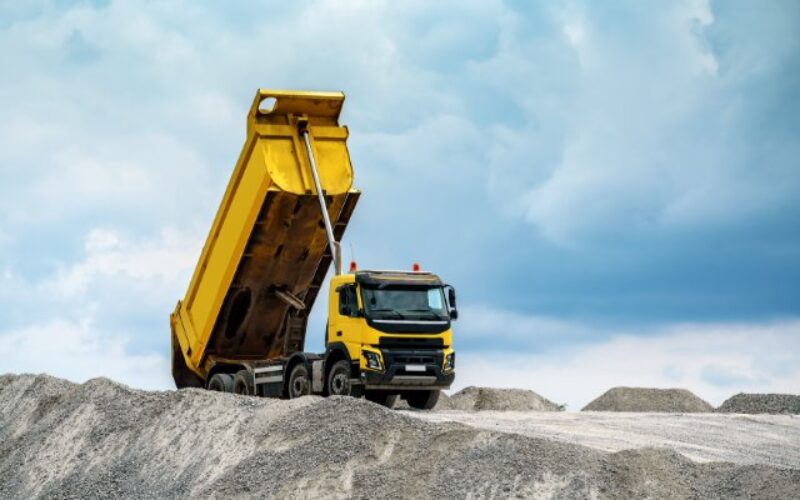
Dump trucks use a mix of pneumatic and hydraulic controls to lift and lower the bed, but the hydraulic side handles the actual lifting. When you need to offload gravel, dirt, or debris, the cylinder extends under pressure to raise the bed and holds it there until you’re ready to lower it. It’s one of the most straightforward hydraulic applications on a work truck, and one of the most common.
Truck-Mounted Cranes
A truck-mounted crane is what you reach for when a load needs to go somewhere a person can’t easily carry it. The boom arm extends and rotates using hydraulic pressure, and it holds position under a suspended load without needing constant motor input. That’s useful on job sites where you’re lifting materials into place and need the arm to stay put while you work.
Hydraulic Augers
An auger is a drill attachment that bores into the ground, and the hydraulic version gets enough torque to push through compacted soil or rocky terrain. You’d use one for setting fence posts, drilling for utility lines, or any job where you need a clean hole at a consistent depth. The truck’s PTO drives the rotation, so no separate power source is needed on site.
Grapple Attachments
A grapple is a claw-style attachment for grabbing and moving bulky or irregular material like brush, logs, or demolition debris. Hydraulic cylinders open and close the jaws, and the pressure holds the grip constant while the truck moves. If you’re clearing a lot or managing a job site with a lot of loose material, a grapple handles that faster than manual loading would.
Snow Plows
A hydraulic snow plow angles left and right through directional valves, letting the driver shift the blade without leaving the cab. Some spreader systems tie into the same hydraulic circuit to control how fast material disperses. For municipalities or contractors running winter routes, this setup covers a lot of ground without needing a separate piece of equipment for each task.
One Truck, A Lot of Range
The common thread across all of these is that one truck with the right hydraulic setup can take on jobs that would otherwise need multiple vehicles or additional equipment. If you’re planning a fleet or just trying to get more out of what you already own, knowing which attachments your system can support is the first step.
Image Credentials: Volodymyr Shevchuk, 233005096
end of post … please share it!
-------------------------------------------------------------------------------------------------------------
-------------------------------------------------------------------------------------------------------------
home remodeling reference (links to internal page)
 |
 |
 |
 |
| directory | photos | forms | guide |
Helpful article? Leave us a quick comment below.
And please share this article within your social networks.