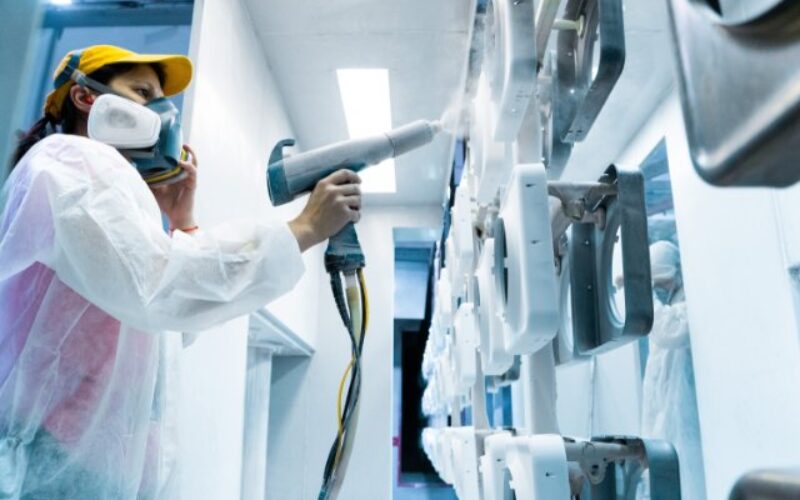

A disciplined approach to building more accurate quotes for coating jobs starts with understanding where labor and material costs quietly build up. You probably already know that many shops price the coating itself and assume everything else will fall into place. In reality, setup time and post-cure work often take more effort than expected, and those small gaps can turn what should be a solid job into one that barely breaks even.
Calculate Setup Labor Before Production
Setup work always starts earlier than most people realize. Before a part even reaches the coating booth, your team is already reviewing surfaces to clean and protecting areas that must stay untouched. Instead of relying on a flat setup fee, you’ll get far better accuracy when you tie those hours to the actual part design. A simple bracket doesn’t demand the same attention as a complex assembly with tight tolerances, and your quote should reflect that difference.
Match Material Costs to the Job
Powder usage rarely follows a perfect formula, and you’ve probably seen how quickly it changes from one job to the next. Part size and transfer efficiency all influence how much material you actually consume. When you pull data from similar past jobs, you give yourself a much stronger starting point than guessing from a theoretical coverage rate.
You also want to think beyond what ends up on the part. Waste and color change losses all add up. If you ignore those factors, you end up absorbing costs that should have been part of the quote from the beginning.
Account for Masking Requirements
Masking often looks simple on paper, but it quickly becomes one of the more time-consuming parts of the process. Your team has to install plugs and then remove everything after curing without damaging the finish. The complexity of the part determines whether you can rely on standard masking supplies or need custom solutions for specific features.
It also matters that you choose materials that can handle the full curing cycle without breaking down. When you understand the powder coating masking temperature limits, you avoid the frustration of failed protection that leads to rework.
Include Rework Risk in Pricing
Even with strong processes in place, no shop eliminates defects. What you can do is understand your own rework patterns and build them into your pricing. When you review past jobs, you’ll notice that certain part types consistently require more touch-ups or inspection time.
Instead of hoping every part comes out perfect on the first pass, you protect your margin by including a realistic allowance for inspection and rework. That buffer doesn’t inflate your price unnecessarily; it simply keeps unexpected labor from eating into your profit. Building more accurate quotes for coating jobs gives you control over your margins without forcing you to overprice your work.
Image Credentials: Aleksei, 284409534
-------------------------------------------------------------------------------------------------------------
-------------------------------------------------------------------------------------------------------------
home remodeling reference (links to internal page)
 |
 |
 |
 |
| directory | photos | forms | guide |
Helpful article? Leave us a quick comment below.
And please share this article within your social networks.