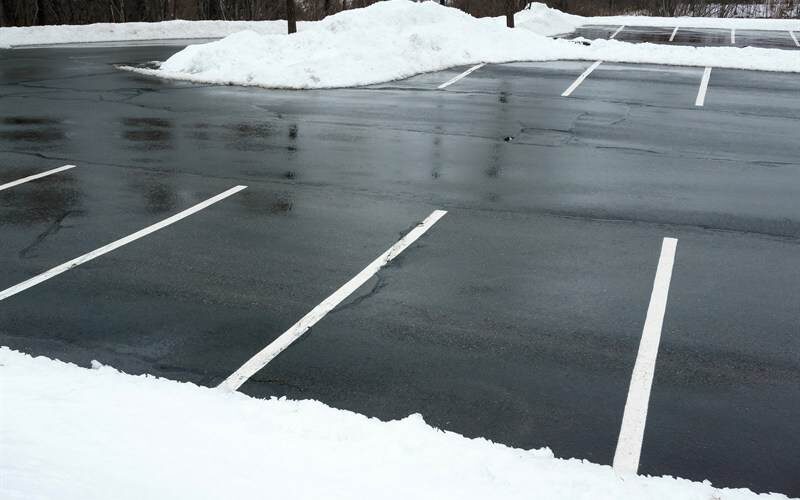

Winter weather puts business parking lots through a lot. Between freezing temperatures and constant vehicle traffic, asphalt takes a beating throughout the colder months. By spring, previously minor surface problems may have developed into expensive repairs.
Fortunately, preventing winter damage to business parking lots doesn’t require waiting until something goes wrong. A little preparation before temperatures drop can protect your pavement throughout the season. Here are 10 ways to reduce winter damage and keep your parking lot in good condition.
Repair Cracks Before Temperatures Drop
Even narrow cracks give moisture a way to reach beneath the asphalt surface. When temperatures drop below freezing, trapped water expands and puts pressure on the surrounding pavement.
Over time, this movement weakens the edges of existing cracks and allows additional water to penetrate deeper into the pavement.
Crack filling prevents water from entering these openings when applied to suitable, properly prepared surfaces. It’s best to schedule repairs before winter, when dry conditions and warmer temperatures allow the materials to bond properly. Waiting until spring gives existing damage several more months to develop.
Sealcoat Asphalt Before Winter Arrives
Asphalt gradually deteriorates through exposure to sunlight and moisture. Over time, its surface loses some of its flexibility, making it more vulnerable to cracking when temperatures drop.
Sealcoating adds a protective coating that reduces direct exposure to water and slows surface deterioration. However, it doesn’t repair structural problems or eliminate the possibility of freeze-thaw damage.
Application timing is important because sealcoat needs suitable temperatures and adequate drying conditions. Understanding when to schedule your parking lot sealcoat application allows you to plan maintenance before cold weather interferes with the process.
Keep Drainage Systems Free of Debris
Standing water creates trouble for asphalt during winter, especially when temperatures repeatedly cross the freezing point. If water collects in low areas, it can enter existing pavement defects and contribute to deterioration.
Parking lot drains need an unobstructed path for runoff. When fallen leaves accumulate over drain openings, water may remain on the pavement longer than intended.
Before winter, inspect drainage inlets and remove accumulated debris. Following heavy precipitation, look for puddles that remain after nearby surfaces have dried. Persistent pooling may indicate a drainage problem that requires more than routine cleaning.
Remove Snow Before It Becomes Compacted
Fresh snowfall is easier to remove than snow that’s been compressed by repeated vehicle traffic. Once tires pack snow against the pavement, it forms a dense layer that becomes difficult to scrape away.
Compacted snow can eventually develop into ice, making the parking lot harder for drivers and pedestrians to navigate. Removing snowfall before heavy traffic arrives reduces the amount left behind.
Your snow removal schedule should account for when vehicles begin entering the property. During prolonged storms, multiple clearing sessions may prevent excessive accumulation and reduce the need for aggressive scraping afterward.
Adjust Snowplow Blades to Protect Asphalt
Snowplows remove accumulated snow, but improper blade settings can damage the pavement underneath. A blade that catches uneven asphalt may scrape away loose material or strike raised sections.
Existing cracks and potholes increase the risk because damaged pavement has irregular edges. Repeated contact with a metal blade can worsen these defects over the winter.
Proper blade height reduces the risk of scraping asphalt during snow removal. Adjustable skid shoes allow operators to control how closely the blade travels over the pavement, while suitable cutting edges reduce contact with uneven surfaces. These adjustments protect the asphalt without interfering with snow removal.
Use Deicing Materials Carefully
Ice creates hazardous walking and driving conditions, so deicing materials have an important purpose during winter. Still, applying excessive amounts doesn’t guarantee better results.
Different deicers operate within different temperature ranges. Rock salt becomes less effective as temperatures fall, meaning spreading additional salt during extreme cold may accomplish very little.
Following the manufacturer’s application recommendations reduces waste and unnecessary chemical buildup. Checking the pavement temperature before applying a deicer allows you to select a product that will work under the current conditions. Proper application also reduces the amount of salt left on the pavement after the ice melts.
Prevent Snow Piles From Blocking Drainage
Parking lot snow needs somewhere to go after a plow pushes it aside. Unfortunately, large piles placed near drainage openings can interfere with runoff when temperatures rise.
As accumulated snow melts, water travels across the pavement toward nearby drains. If a snow pile blocks that route, meltwater may collect in areas where it can freeze again overnight.
Designated snow storage areas should leave drainage paths accessible throughout winter. Large accumulations also need enough space for melting water to disperse without crossing heavily traveled sections of pavement.
Planning these locations before the first major storm prevents unnecessary drainage problems later.
Keep Heavy Vehicles Away From Damaged Pavement
Winter conditions make existing asphalt damage more vulnerable to additional stress. When water weakens the underlying base, heavy vehicle loads can accelerate deterioration.
Delivery trucks are a concern because their weight places greater pressure on compromised sections. Repeatedly driving over a weakened area may cause the pavement to deform or break apart.
If you already know certain sections have underlying damage, temporary traffic restrictions can reduce further deterioration until repairs become possible. Directing heavy deliveries toward pavement that’s in better condition limits stress on vulnerable areas.
Inspect Your Parking Lot After Winter Storms
Snow removal doesn’t reveal every pavement problem underneath. Some damage becomes visible only after temperatures rise and accumulated snow melts.
Periodic inspections allow you to identify new cracks or potholes before traffic makes them worse. Look closely at areas where water has collected because repeated freezing can accelerate deterioration around existing defects.
You don’t need an elaborate inspection process. A walk through the property after major storms can reveal damage that drivers may otherwise encounter unexpectedly.
Documenting newly damaged areas also gives maintenance crews a record of which locations need repairs when weather conditions permit.
Address Potholes Before They Expand
Potholes develop when pavement breaks apart under repeated traffic loads, frequently after moisture has weakened the asphalt and underlying materials. Winter’s freeze-thaw cycles can accelerate that process.
Once a pothole forms, passing vehicles put additional pressure on its edges. Pieces of asphalt gradually loosen, allowing the opening to expand.
Cold-weather asphalt patching materials provide a temporary repair option when conditions prevent permanent work. These patches don’t replace proper pavement restoration, but they can limit further damage and reduce hazards.
When warmer weather returns, a permanent repair should address the deteriorated pavement and any weakened material beneath it.
Keep Your Parking Lot in Good Condition This Winter
Winter weather is unavoidable, but extensive pavement damage doesn’t have to follow. Understanding how to prevent winter damage to business parking lots allows you to protect your asphalt throughout the colder months.
Taking care of your pavement now can save you from costly repairs when spring arrives. A little extra work during winter is a reasonable trade for a parking lot that stays in good condition year after year.
Image Credentials: By nd700, 128424397
-------------------------------------------------------------------------------------------------------------
-------------------------------------------------------------------------------------------------------------
home remodeling reference (links to internal page)
 |
 |
 |
 |
| directory | photos | forms | guide |
Helpful article? Leave us a quick comment below.
And please share this article within your social networks.